The Complete Guide to DIY Living Room Interior Design
La-Z-Boy Southeast | March 12, 2026
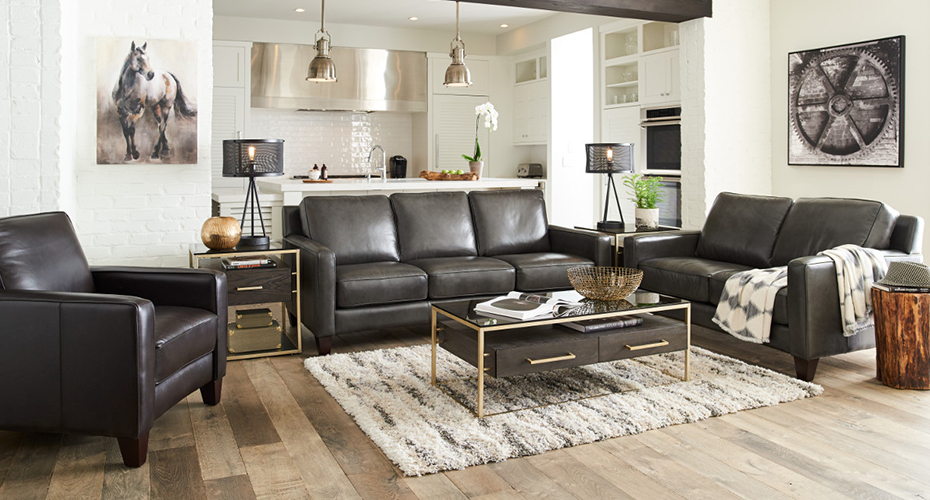
Designing your own living room starts with understanding how the space actually works — who uses it, how they move through it, and what the room needs to do on a daily basis. Once you answer those questions, the style choices, furniture decisions, and finishing touches tend to fall into place much more naturally than you’d expect. You don’t need a degree in interior design to create a living room that looks intentional and feels like home. You just need a plan.
Start by Studying Your Own Taste
Before you shop for a single thing, spend a week or two paying attention to what catches your eye. Scroll through Instagram, watch a few episodes of your favorite home design show, or flip through a magazine at the dentist’s office. What matters isn’t where the inspiration comes from — it’s whether you notice patterns in what you’re drawn to. Maybe you keep gravitating toward warm wood tones and earthy neutrals. Maybe you light up every time you see a room with bold color and layered textures. Write it all down, even the things you don’t like, because knowing what to avoid is just as useful as knowing what you love.
Figure Out What the Room Needs to Do
A living room that hosts movie nights for a family of five needs a completely different setup than a formal sitting room that’s mostly used when company comes over. Before you think about aesthetics, think about function. How many people need to sit comfortably at one time? Do kids or pets need to be factored in? Is this the room where everyone gathers, or is it more of a quiet retreat?
These aren’t boring logistics questions — they’re the foundation that keeps you from falling in love with a gorgeous but totally impractical room layout. A sectional might be the perfect fit for a family room, while a pair of accent chairs and a loveseat could be exactly right for a more intimate space.
In the video below, our team of designers presents their top five favorite interior design tips for your living room.
Work With What You Already Have
Not everyone is starting from scratch, and that’s actually a good thing. If you have a piece of furniture that still works — structurally sound, comfortable, and not wildly out of step with the direction you’re headed — there’s no reason to replace it just for the sake of newness. The same goes for sentimental items. A vintage side table passed down from a grandparent or an old trunk repurposed as a coffee table can give your room a sense of story that brand-new furniture simply can’t replicate.
The trick is being honest about what’s worth keeping and what’s just taking up space because you haven’t gotten around to letting it go.
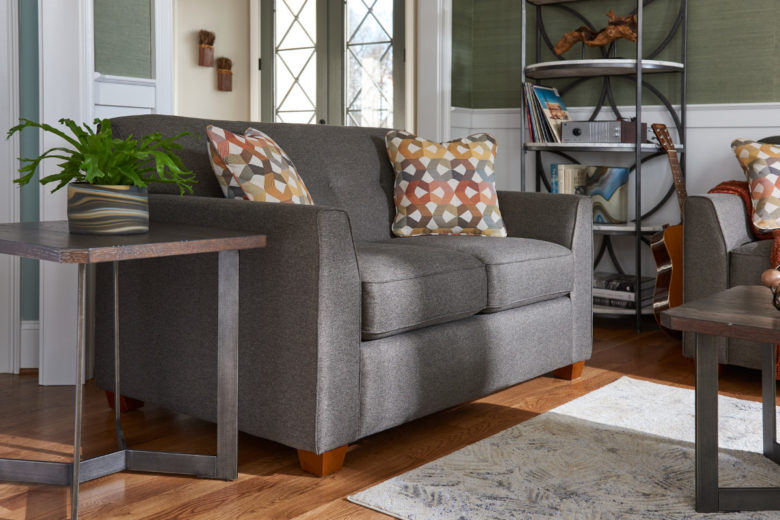
Map Out Your Layout Before You Buy
This step trips up more people than almost anything else. It’s tempting to pick out a sofa you love and figure out where to put it later, but that’s how you end up with furniture that blocks a walkway or a room that feels cramped despite being a decent size.
Start by observing how people actually move through the space. Where do they enter? Where do they naturally want to sit? Is there a fireplace, a large window, or a TV that serves as a focal point? Once you understand the traffic flow, sketch a rough layout with measurements. It doesn’t need to be architectural — even a quick drawing on notebook paper with approximate dimensions will save you from expensive mistakes. Snap a few photos on your phone too, because it’s surprisingly easy to misremember a room’s proportions once you’re standing in a showroom.
For anyone who wants to take it a step further, a 3D room plan can show you exactly how a piece of furniture will sit in your space before you commit. La-Z-Boy Southeast offers free 3D room planning as part of their complimentary design service at all locations across NC, SC, and GA.
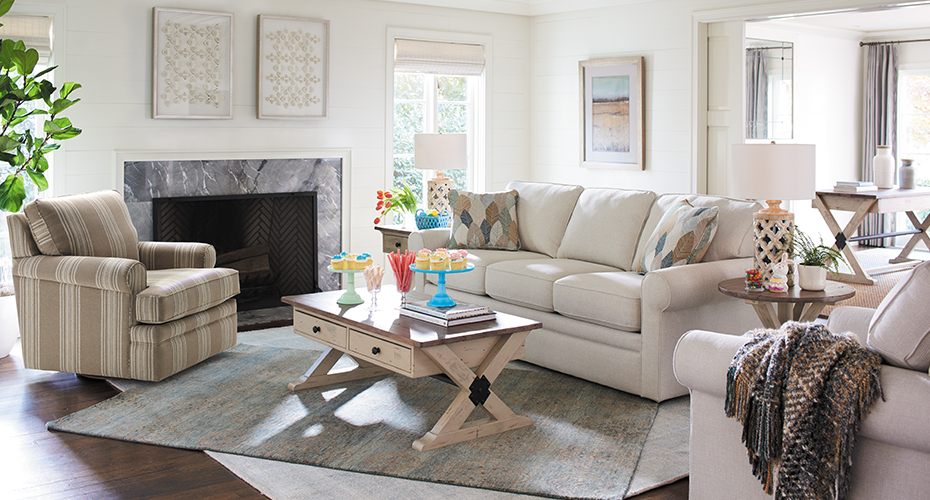
Keep Your Biggest Pieces Neutral
Here’s one of the smartest moves professional designers make: they dress their largest furniture in neutral tones. A sofa or sectional in a classic gray, cream, or soft taupe gives you enormous flexibility to change the personality of the room over time just by swapping out accent pillows, throws, and accessories. Bold color on a statement chair or ottoman? Absolutely. Bold color on the largest piece in the room? That’s a commitment that gets expensive to undo.
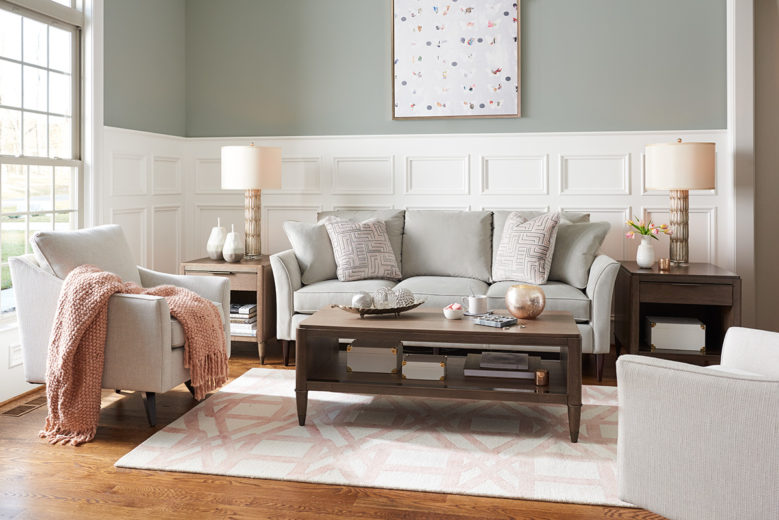
Pay Attention to Scale and Proportion
A room can have beautiful individual pieces and still feel off if the scale is wrong. An oversized coffee table in front of a petite loveseat, or a tiny area rug floating in the middle of a large room, creates a visual disconnect that’s hard to pin down but easy to feel.
The general rule with area rugs is that they should be large enough for at least the front legs of your seating to rest on them. This anchors the furniture grouping and makes the whole arrangement feel cohesive instead of scattered. Think of the room as one composition rather than a collection of separate pieces, and the proportions tend to sort themselves out.
Choose Fabric Before Paint
This one sounds backward, but it’s a designer trick that saves a lot of frustration. Fabric options, while plentiful, are finite. Paint colors are essentially infinite — any shade can be custom-mixed to match. So it’s much easier to find a paint that complements your upholstery than to find upholstery that matches a paint color you’ve already committed to. Pick your sofa and chair fabrics first, then bring swatches to the paint store.
Layer Your Lighting
Overhead lighting alone tends to flatten a room and wash out the textures and colors you’ve worked so hard to choose. The fix is layering — combining ambient light (your overhead fixture or recessed cans), task lighting (a reading lamp beside a chair), and accent lighting (a table lamp on a console or picture lights above artwork). Each layer serves a different purpose, and together they give you the ability to shift the mood of the room depending on the time of day or the activity.
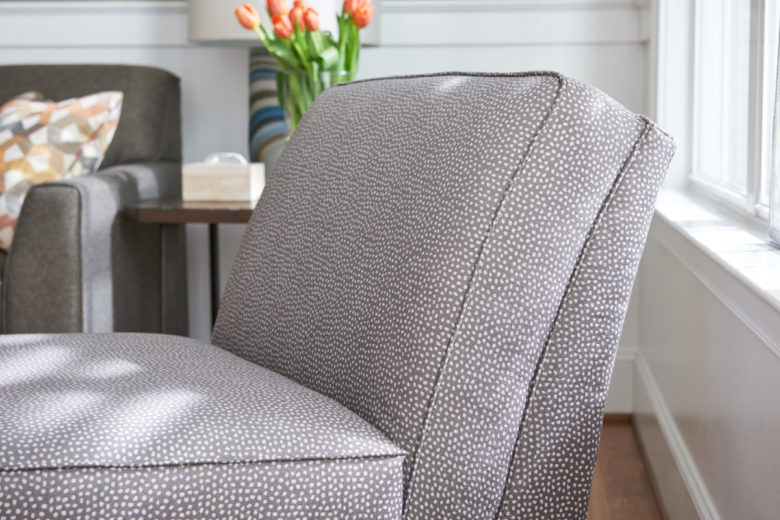
You’ll also notice that your fabrics look different under different types of light, which is why designers recommend viewing fabric samples in the actual room where they’ll live, under both natural and artificial light, before making a final decision.
Click here to download your Furniture Buying Guide for free!
Accessorize With Intention
Accessories are where your personality really shows up in a room, but more isn’t always better. Designers often follow the rule of odd numbers — grouping items in threes or fives — because odd-numbered arrangements feel more natural and visually interesting than perfectly symmetrical pairs. A stack of three books topped with a small plant and a candle will almost always look better than two matching candlesticks placed equidistant from a center point.
Choose accessories that actually mean something to you. Travel finds, family photos in interesting frames, a piece of pottery from a local artist — these are the things that make a room feel lived-in rather than staged.
When to Call in Backup
Doing it yourself doesn’t mean you have to do it alone. Sometimes a second set of eyes is all it takes to solve a layout puzzle or confirm that the fabric you’re leaning toward is the right call. La-Z-Boy Southeast offers free consultations with degreed interior designers at every store, and there’s no obligation to buy. It’s a resource worth taking advantage of, whether you’re just getting started or you’re ninety percent done and stuck on the last ten.
Further Reading
If you’re diving deeper into specific topics covered here, these guides go into more detail:
Furniture Buying Guide: Everything You Need to Know · Best Furniture for Pets: Leather or Fabric? · Most Durable Furniture Fabrics · The Rule of Odd Numbers in Design · Interior Design Tips for Your Living Room